Highlights
- Arizona ranches offer diverse properties, appealing to both agricultural and recreational buyers.
- The market is shifting, presenting unique opportunities for informed investments by mid-2025.
Summary
Arizona ranches vary from operational cattle ranches to luxury estates, reflecting the state’s geography from deserts to forests. They are vital for agriculture and conservation, preserving wildlife habitats while suitable for diverse investments. The market offers hundreds of listings from affordable plots to extensive ranches with developed infrastructure, providing buyers specialized services focused on water availability, zoning, and recreational potential. Current market dynamics show a shift toward more balanced conditions by mid-2025, presenting opportunities for informed buyers.
Overview of Arizona Ranches
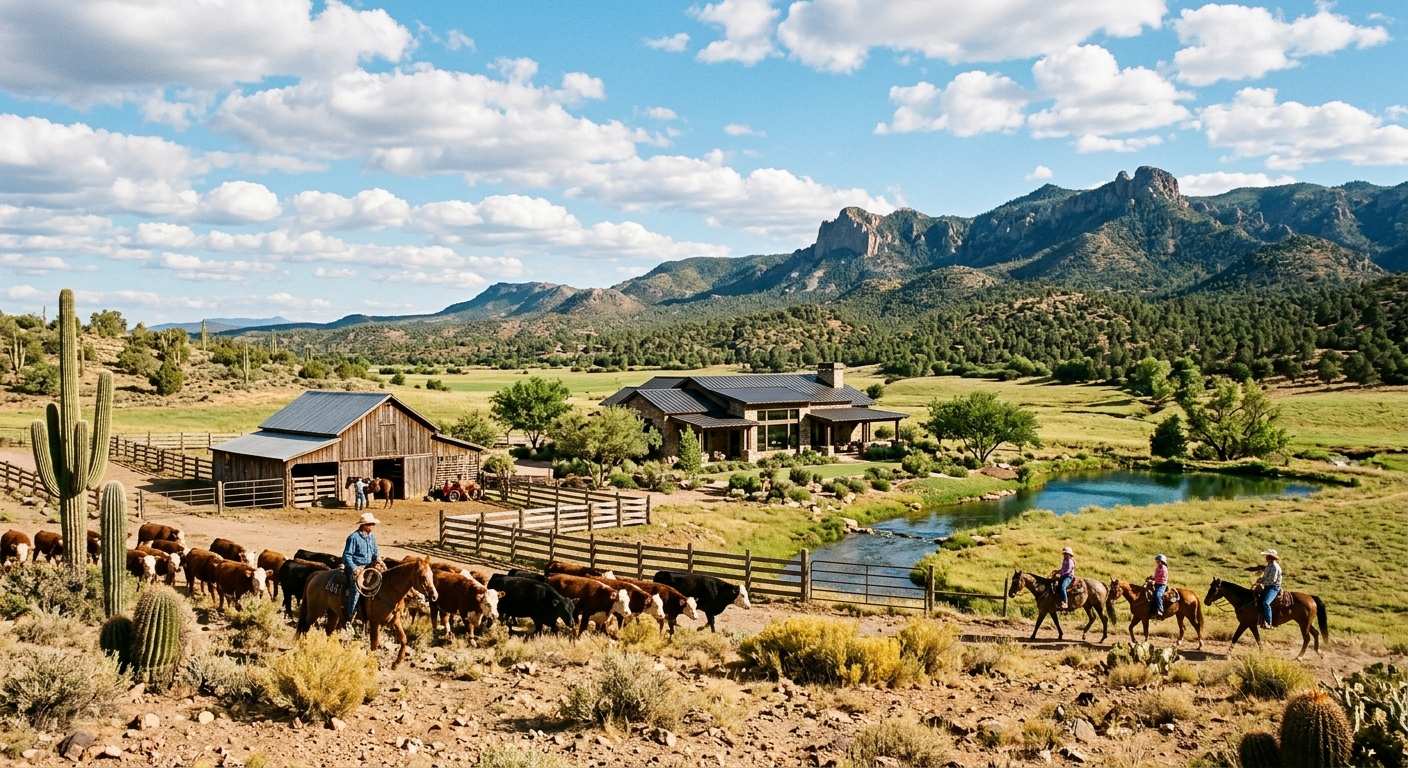
Distinctive Arizona ranches range from vast cattle operations to intimate guest ranches situated across diverse landscapes. These properties support ecological heritage by fostering sustainable practices that promote soil health and manage water resources effectively. With varied sizes and purposes, ranches cater to different buyer interests, combining agricultural productivity with recreational and conservation values.
Purchasing Options for Arizona Ranches
Buyers have multiple options for purchasing Arizona ranches, including cattle properties and recreational retreats. The market presents a wide array of listings, typically averaging around $2.2 to $2.3 million, with comprehensive service from specialized brokers who analyze critical aspects like water access, wildlife presence, and operational potential. As the market stabilizes by mid-2025, opportunities for reasonable pricing and informed decisions are increasingly accessible.
Key Buying Considerations
Evaluating several essential factors is crucial for successfully purchasing an Arizona ranch, including location, water access, zoning regulations, and existing infrastructure. Location influences suitability for agriculture and recreation, while water rights are critical given Arizona’s aridity. Zoning laws dictate land use flexibility, while infrastructure quality affects property usability and value. Understanding these dynamics ensures compliance with legal frameworks and optimizes investment potential.
Location and Accessibility
Choosing the right location is vital as it shapes the property’s functionality for agricultural or recreational uses. Arizona’s diverse landscapes offer unique advantages, but adequate access to transportation routes is necessary, particularly for larger operations.
Water Rights and Availability
Water access must be verified due to its significance for livestock and agriculture. Buyers should explore existing water rights, acknowledging that they can be lost if not utilized over five years, necessitating due diligence to ensure sustainable management and compliance with local laws.
Zoning Regulations
Understanding the current zoning regulations is essential for confirming land-use suitability. Agricultural zoning typically allows greater flexibility than residential, but buyers need to familiarize themselves with recent updates and restrictions to avoid complications during land development.
Infrastructure and Parcel Size
Evaluating existing infrastructure, such as access to utilities and transportation, is critical for value and practicality. Property size should align with the buyer’s intentions, whether for commercial operations or recreational retreats, influencing overall usability and management effectiveness.
Environmental Impact and Recreation
Many ranches promote conservation and eco-tourism by sustaining native wildlife and offering outdoor recreational activities. Potential buyers should assess any environmental regulations that may impact land use, ensuring compliance while optimizing recreational opportunities.
Market Dynamics
The Arizona ranch market is stabilizing, with projected consistency through 2026. As demand grows for properties near recreational hotspots, investors must analyze market trends and pricing to identify viable opportunities that align with their investment goals while accommodating budget variations.
Common Ranch Uses
Arizona ranches fulfill diverse roles such as livestock operations, crop production, tourism, and conservation. Livestock and sustainable agricultural practices form the backbone of Arizona’s rural economy, while recreational tourism, including dude ranches, offers an authentic experience for visitors. Many properties also play essential roles in ecosystem preservation and can serve as income-generating assets through diversified uses.
Financing and Legal Framework
Understanding financing options and legal requirements is critical for a smooth acquisition process. Buyers may find owner financing appealing for larger projects. Legal obligations ensure compliance with zoning and environmental regulations, protecting personal and community interests while using the land sustainably.
Market Trends and Pricing
The Arizona ranch market is transitioning toward stability, with increased interest and resilient values expected through 2026. A range of prices reflects varying property types, from luxury ranches to more accessible options, allowing buyers to explore diverse investments while considering key factors like location and water rights.
Highlighted Ranch Listings
Arizona boasts a rich portfolio of ranches blending traditional charm with contemporary luxury. Properties like the Rigden Ranch reflect historical roots, while the Wineglass Ranch supports operational cattle farming. Montosa Canyon Ranch exemplifies high-end living with comprehensive amenities, and Stutts Ranch Resort & Arena offers luxury equestrian facilities. Other notable listings, like the expansive Tombstone Ranch, highlight the range of opportunities available in Arizona’s attractive ranching landscape, catering to various buyer interests and budgets.
The content is provided by Blake Sterling, News Mobitech