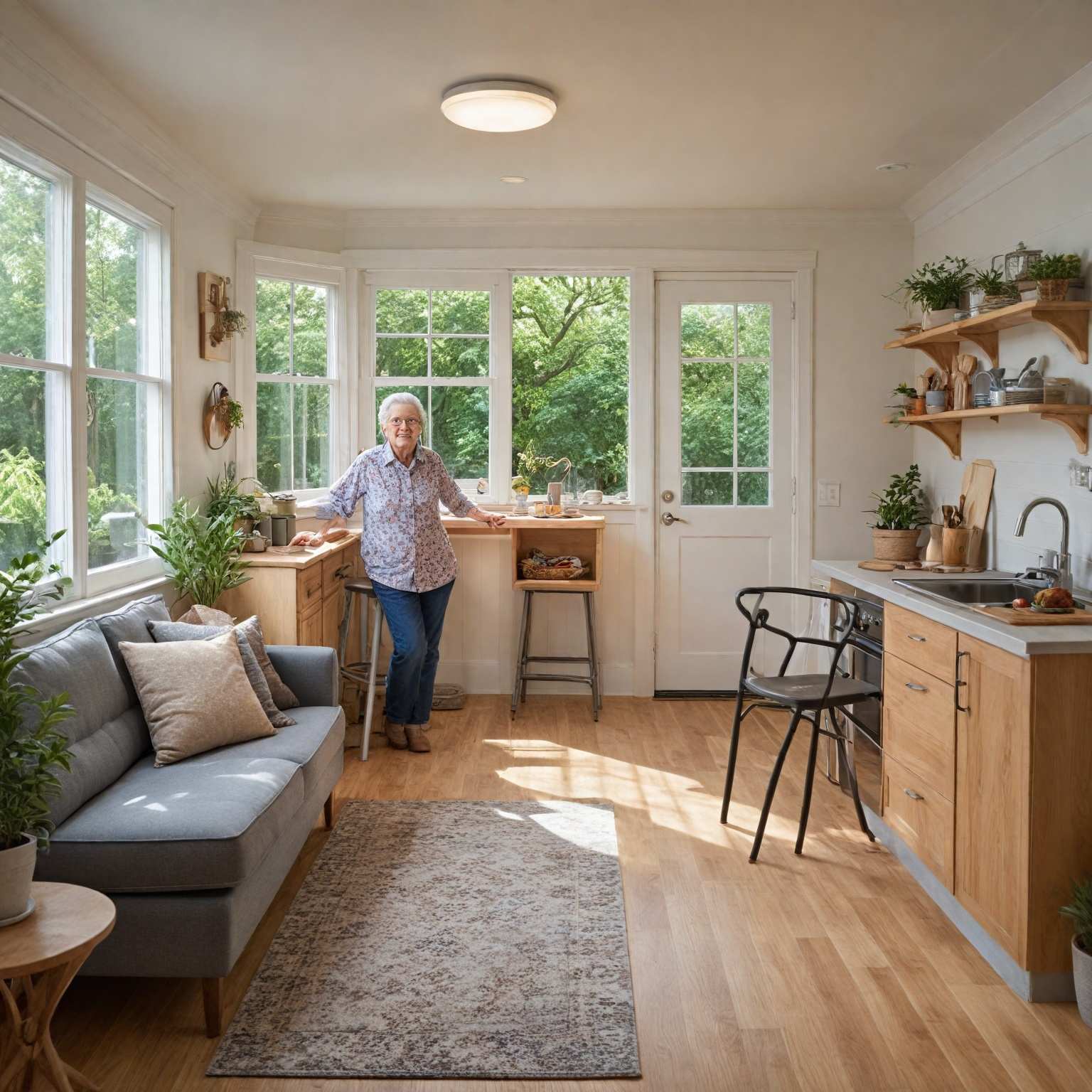
Highlights
- Tiny homes provide affordable, accessible living options, promoting independence for seniors.
- Emerging tiny home communities offer social engagement, combating isolation among older adults.
Summary
Tiny homes are increasingly viewed as an appealing housing solution for seniors seeking a more affordable, accessible, and simplified lifestyle. With a growing older adult population, many retirees are downsizing from larger homes to smaller living spaces that promote independence and safety. Ranging from 100 to 400 square feet, these homes often integrate universal design elements and smart technologies to meet seniors’ mobility and health needs, allowing them to age comfortably in place. Furthermore, tiny home communities designed for older adults enhance social engagement and offer senior-friendly amenities that help combat isolation.
Popularity Among Seniors
The rising interest in tiny homes among seniors is largely driven by the desire to downsize and embrace a minimalist lifestyle. This transition enables seniors to reduce expenses by 30% to 70%, freeing up resources for personal growth or investments. Additionally, many tiny homes offer single-level layouts that improve accessibility for residents using mobility aids. The community aspect of tiny home living fosters social interactions, providing seniors with an environment that combats isolation and supports emotional well-being.
Design Considerations
When designing tiny homes for seniors, accessibility and safety are paramount. Features like step-free entrances and slip-resistant flooring enhance mobility for those with physical limitations. Incorporating safety technologies, such as voice-activated systems and automated lighting, increases control and security within the home. Space optimization through multifunctional furniture and creative storage solutions is vital to maintain organization and comfort, promoting an environment that encourages both independence and ease of living.
Benefits Overview
The advantages of tiny homes for seniors are significant and multifaceted. Aside from substantial cost savings, seniors experience lower maintenance burdens, which is particularly beneficial as they age. A minimalist lifestyle encourages mindfulness and reduce stress by fostering appreciation for what truly matters. Living in tiny home communities can improve social connectivity, further enhancing seniors’ overall quality of life while promoting activity and engagement.
Challenges to Consider
Seniors must navigate several challenges when considering tiny homes, including complex zoning regulations and limited financing options. Legal ambiguities surrounding tiny homes can lead to complications if not understood properly, especially for those considering mobile homes classified as RVs. Additionally, accessibility features require significant planning due to space limitations, and social isolation can be a concern for those living in more remote settings. However, community-oriented designs can mitigate this risk by fostering connections among residents.
Architectural and Sustainability Features
Architecturally, tiny homes prioritize ease of access and comfort through one-story layouts and open floor plans designed for adaptability. Safety features and assistive technologies play essential roles in creating user-friendly environments. Sustainability is also central to tiny home design, with eco-friendly materials and energy-efficient systems reducing environmental footprints and utility costs. Implementing renewable energy sources, such as solar panels, enhances this sustainability while offering a practical solution for seniors on fixed incomes.
Social and Lifestyle Motivations
Tiny homes encourage a lifestyle focused on personal growth and social engagement. The compact nature of these residences allows for meaningful experiences and active living, which promote overall mental health and well-being. Tiny home communities actively foster social connections through shared activities and amenities, allowing residents to engage meaningfully and reduce feelings of isolation.
Future Trends
Future developments in tiny homes for seniors point toward greater integration of accessory dwelling units within residential settings and advancements in smart home technologies. Innovations in design increasingly prioritize accessibility, while sustainability measures continue to gain traction. Building supportive tiny home communities for seniors fosters social interaction, creating environments where independence and social connectivity can thrive. Ongoing efforts to address financing and recognition of tiny homes are essential to enhancing their viability as a long-term housing solution for seniors.
The content is provided by Jordan Fields, News Mobitech